
Why I Write Humor
2026 Issue # 15

My newest book, coming out in June, might be my proudest achievement. If you tuned in last Friday I revealed the cover and talked about the inspiration behind it. It’s called Surviving the Midnight Hurl at Camp Whurl.
Yes. That’s really the title.
Yes. It involves vomiting.
Yes. It’s inspired by real events.
Quick recap. Last year my son went to church camp. Three days in, camp was canceled. Why? Because 167 kids came down with norovirus and, in a six- to seven-hour window, turned a peaceful campground into what I can only describe as a synchronized Olympic event no one trained for.
It was biblical.
Not the inspiring parts.
More like plagues.
As a father, I was concerned.
As a writer… I took notes.
Because here’s the thing: kids will laugh at what adults want to sanitize. They laugh at chaos. They laugh at embarrassment. They laugh at the worst possible moment. They laugh when the canoe tips over, when the flashlight dies, when the counselor says, “Does anyone feel—” and is immediately interrupted by catastrophe.
And if you understand why they laugh?
You can write scenes they will never forget.
Surviving the Midnight Hurl at Camp Whurl is not just a book about a camp-wide stomach disaster. It’s a story about friendship forged in the most unfortunate of circumstances. It’s about courage discovered in the dark. It’s about the strange badge of honor that comes from surviving something gross together. Most of all, it’s about how humor transforms misery into memory.
When I began writing this story, I realized something important: humor isn’t a distraction from hard things. It’s a way through them.
We tend to think of humor as optional, like it’s a garnish sprinkled on top of a “serious” story. A clever line here. A funny side character there. But laughter is far more powerful than that. Humor builds connection. It deepens character. It sharpens tension. It makes readers lean closer because they feel safe enough to do so.
In stories for young readers especially, humor creates trust. When a child laughs, they open the door. And once that door is open, you can lead them anywhere. Into questions about courage, faith, friendship, identity, or fear.
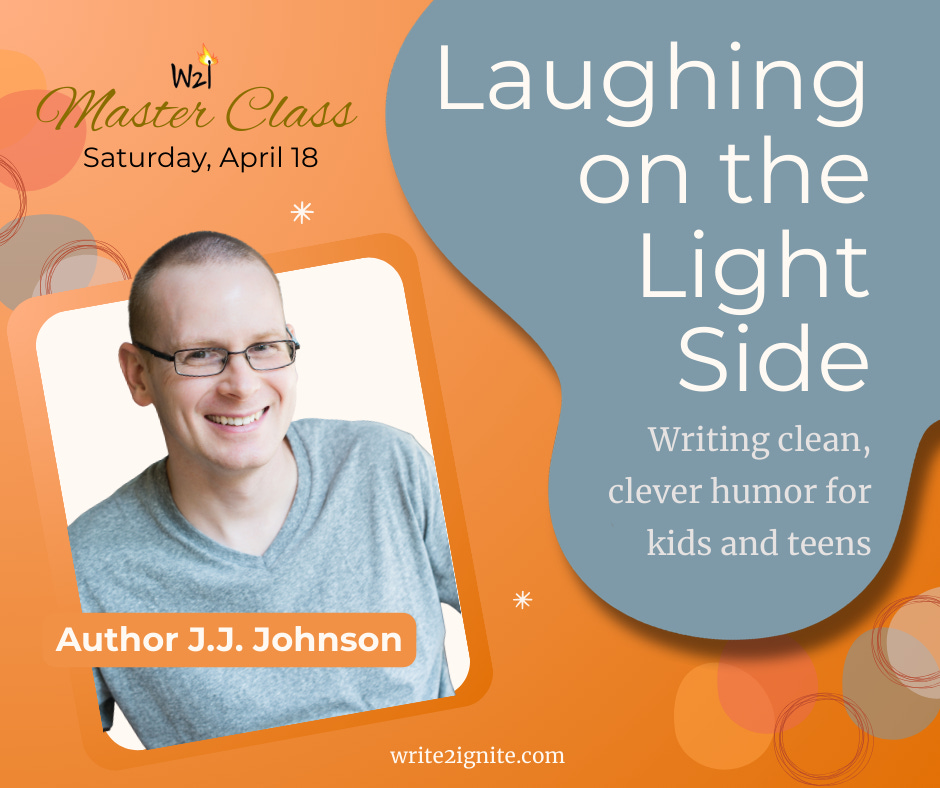
That realization is what led me to create my upcoming masterclass: Laughing on the Light Side.
This masterclass is designed for writers who want to do more than “add a few jokes.” It’s for storytellers who want to understand how humor works, and how to use it intentionally.
In Session 1: Humor Is More Than Jokes, we’ll explore why laughter creates connection, deepens character, and strengthens tension in a story. We’ll talk about why clean humor is not the same thing as watered-down humor—and why, especially for writers of faith, comedy can actually strengthen the themes we care about most. Humor disarms. It invites. It makes space for truth to land gently. When used well, it doesn’t undermine meaning—it amplifies it.
In Session 2: Writing Funny for Kids and Teens: MG, YA, and Picture Books, we’ll break down how humor shifts across age categories. What makes a third grader howl with laughter is very different from what earns a knowing smirk from a teenager. We’ll explore how comedic voice changes from picture books to middle grade to YA, and how timing, tone, and word choice evolve as readers grow. Understanding these differences is the key to writing humor that feels authentic rather than forced.
Then in Session 3: Comedy Toolbox – Building Hilarious Scenes, we get practical. Very practical. This hands-on session delivers concrete techniques you can use immediately: comedic timing, escalating chaos, awkward dialogue, reversals, misdirection, and the art of letting a scene spiral just far enough before pulling it back. You’ll walk away with tools to build funny moments on purpose—not by accident.
Because that’s the secret.
The camp incident that inspired Surviving the Midnight Hurl at Camp Whurl was chaotic and miserable in real life. No one in the moment thought, “This will make a great story someday.” But storytelling allows us to reshape chaos into meaning. Humor lets us take the worst night and turn it into the best chapter.
Kids already know that life is messy. They don’t need us to pretend otherwise. What they need are stories that tell them: you can survive this. You can laugh again. You can find light, even here.
Sometimes especially here.
If a campground overrun by norovirus can become a story about resilience and friendship, then maybe the awkward, embarrassing, unpredictable parts of our own lives can become something more, too.
That’s what this book celebrates. That’s what this masterclass teaches.
And that’s why I’m so excited to invite you to laugh on the light side.
Because sometimes the plagues pass.
But the stories?
Those last forever.
Registration closes soon.
If you can’t join us Saturday
You have access to the replay for the next three months
Omw I can't even imagine dealing with that!!! Wowwww!! God bless the camp counselors. :)
This class sounds incredible! I appreciate the idea of using humor to connect with readers and fill our books with hope. Even in the most solemn stories, a bit of lightheartedness always helps balance out the serious subject matter.